ePrivacy and GPDR Cookie Consent by Cookie Consent
Skip to content

7 lost villages of Oxfordshire

Lost villages have always held a fascination for me. How can a thriving community vanish in the space of a hundred or so years, often leaving nothing but a few bumps in a field? The Oxfordshire countryside is full of such places, all of which possess an air of mystery about them. Here are seven of the most notable ones.

1. Widford, near Burford

The 13th century church of St. Oswald once supported a thriving rural community on the banks of the river Windrush just east of Burford. Today nothing remains beyond the church and a few earthworks hiding the foundations of numerous nearby houses, monastic buildings and a water mill.

The reason the village was abandoned will become a tragically familiar story: the black death.

When the plague arrived in England in 1348, as many as two thirds of the population perished. Local chronicler Geoffrey le Baker, who lived a short distance away at Swinbrook, described the countryside being "so violently attacked that scarcely a tenth of either sex survived". It's likely that those who survived moved away, either fleeing from the disease or simply moving on to more desirable land or properties that had become suddenly vacant as a result of the widespread depopulation.
2. Seacourt, near Botley

Few travellers are probably aware that Seacourt Park & Ride is named after a nearby abandoned village that once existed to the north of the site.

The village was once on the main road between Eynsham and Oxford, and also attracted pilgrims who would stay at Seacourt while visiting the holy healing well at Binsey. And this was no mere hamlet. Records of Seacourt describe A number of streets lined with sturdy stone-built houses and as many as 24 inns to support the large crowds who visited.

Yet by the mid 15th century, it is reported that the parish church and most of the buildings stood in ruin. What caused this precipitous drop in the villages fortunes? It's likely that the black death played a role, as well as the changes in religious custom that meant that fewer pilgrims visited the holy well. Antiquarian Anthony Woods visited in the 17th century and reported that the ruins of Seacourt were still visible. Today there are no signs of the village's existence beyond a few bumps in the fields.

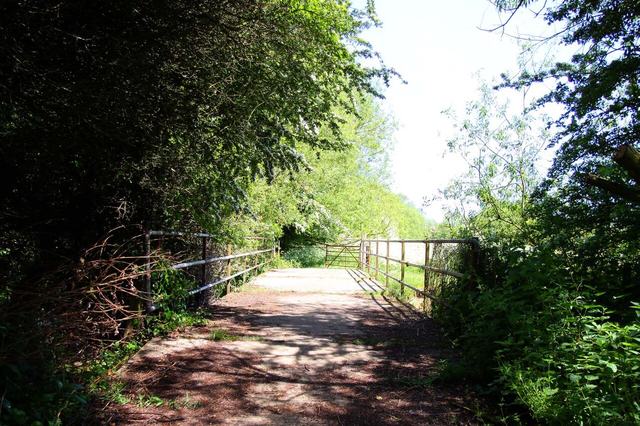
A view over a flat rural bridge overhung with trees.

Bridge over the Seacourt Stream by Steve Daniels, CC BY-SA 2.0

3. Bix Bottom and Bix Brand, near Henley on Thames

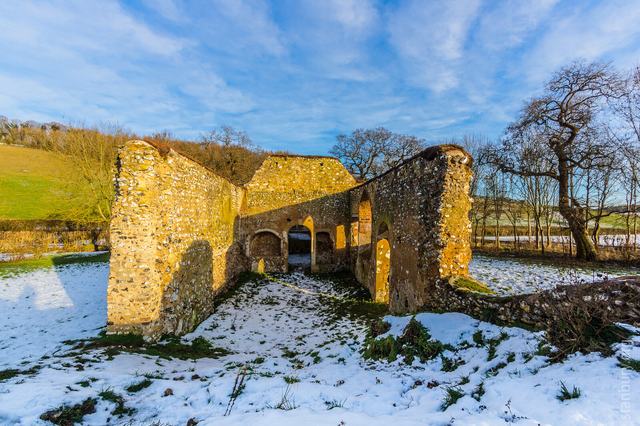
The abandoned church at Bix Bottom holds a special place in the hearts of fan of 1970s British horror cinema, as a number of memorable scenes from 1971's Blood on Satan's Claw were filmed here.

Between the 11th and 14th century the church would have likely been surrounded by a number of village properties, none of which remain today. The exact reason that the village dwindled away is hard to attribute to a single source. Regular flooding in the valley may have discouraged agriculture, and the black death and later the industrial revolution likely played a part.

St. James's Church hung on longer than the rest of the village. Repairs to it were still being made in the 18th and early 19th century, but it was eventually abandoned in 1875 and a new church built at the top of the valley, nearer the present-day village.

Today, the ruins of St. James's Church are managed by English Heritage and remain very atmospheric and worth a visit, particularly at dusk when bats can be seen flitting around the ruins.

Bix Church

Bix Old Church 7 by FlickrDelusions is licensed under CC BY-NC-SA 2.0.

4. Asterleigh, near Charlbury

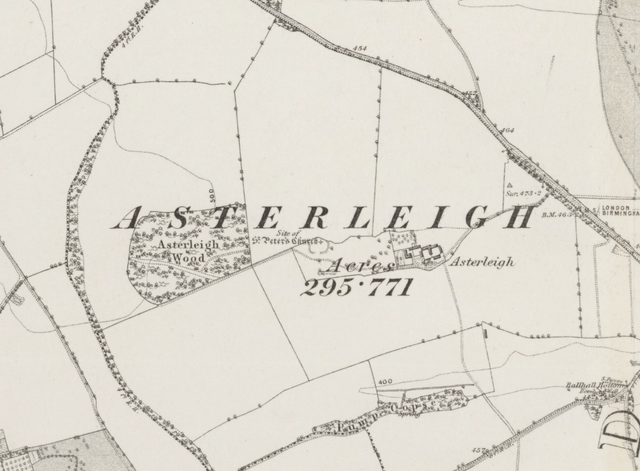
All that remains of the medieval village of Asterleigh can be found to the south of the A44, just north of Ditchley Park. Little can be seen on the ground today, beyond the 0.6m high rectangular earthwork that marks where St. Peter's Church once stood. Aerial photography has helped identify the foundation of at least 10 sizable buildings surrounding the church.

The village was home to a thriving community during the 12th and 13th century, as archaeologists have surmised from the presence of quarries and kilns in or close to the village. However, the community never really bounced back from the various waves of black death in the 14th century. Census records show that by 1466 what remained of the population had abandoned the village and moved to nearby Over Kiddington.

According to ancientmonuments.uk, the font from St. Peter's church now resides in a garden in Radford!

An Ordnance Survey map from 1886 showing the area around Asterleigh

Ordnance Survey map 1886.

5. Tusmore, near Bicester

Although the black death played a part in the declining fortunes of many of Oxfordshire's lost villages, few can be as conclusively linked to the black death as Tusmore, which is known to have been completely depopulated within 10 years of the disease's arrival.

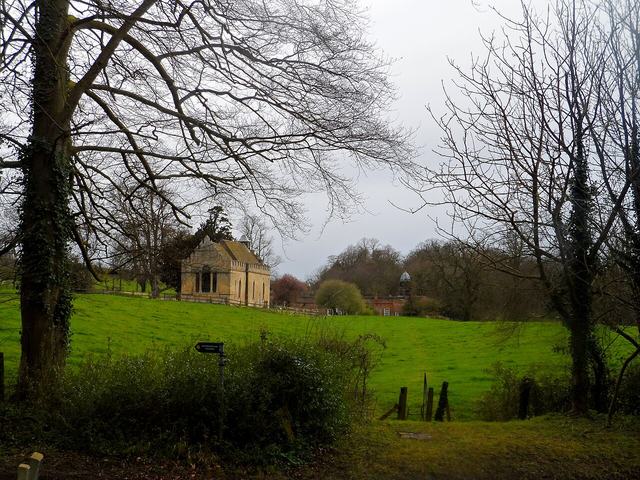
The site of the village stands within the grounds of Tusmore Park. Despite extensive landscaping of the grounds, the dimensions of the old village can still be identified by substantial earthworks that mark it's north, east and southeastern boundaries.

Sir Roger de Cotesford obtained a licence to enclose the village in 1358, only a decade after the black death decimated the village's population. A chapel was later built in the grounds of grand house he built here, but it's not clear if he incorporated any parts of the original village church when he did this.

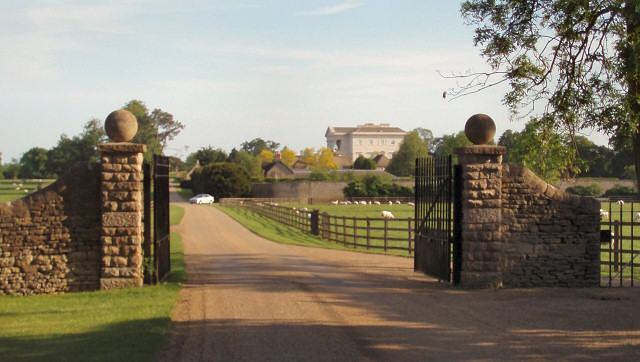
The gated entrance to a stately home

Gates to Tusmore Park by Duncan Lilly, CC BY-SA 2.0

6. Nuneham, near Berinsfield

You could argue that the village of Nuneham was never lost, simply moved. During the 17th and 18th century, it became fashionable for the aristocracy to have the land around their homes converted into elaborately landscaped parkland. If a inconvenient village happened to exist on said land, the wealthy landowner often chose to simply move it.

The occupants of these villages usually had very little say in the matter as they were the landowners tennants. However, it wasn't all bad. If the villagers were lucky, they would be moved into newly-constructed homes that were a considerable upgrade on their old homes.

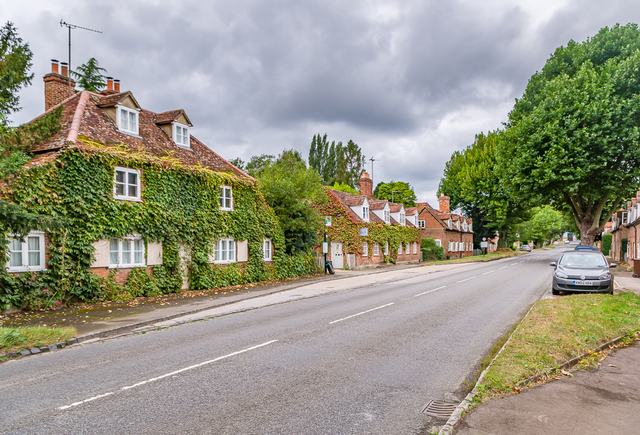
Such was the case when Simon Harcourt, the 1st Earl Harcourt began work on his grand park at Nuneham in 1760. He considered the slightly ramshackle village that stood between his house and the river Thames an eyesore, so had it completely demolished and its occupants moved to a newly-constructed row of cottages half a mile away on the modern-day A4074. While this certainly ruffled some feathers at the time, the village is now considered particularly desirable and picturesque, with the former workers cottages regular changing hands for upwards of half a million pounds!

A straight village street with icy-clad cottages down one side.

Nuneham Courtenay, Ian Capper, CC BY-SA 2.0, via Wikimedia Commons.

7. Wheatfield, near Tetsworth

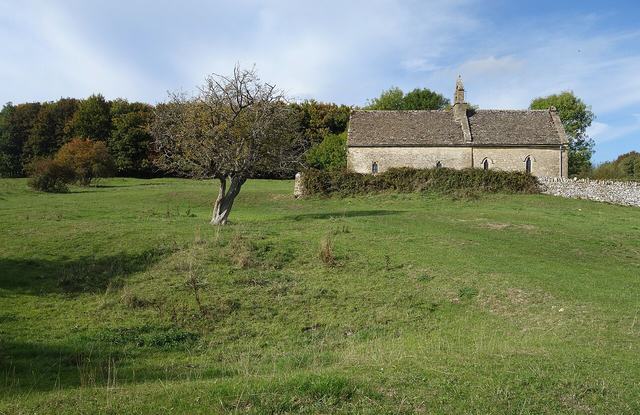
Although recorded in the Domesday book, and showing signs of having been a prosperous village at one time, little is visible of Wheatfield today beyond the parish church standing alone in a field.

Wheatfield weathered the black death of the 14th century well, and continued to expand in size, but first nail in Wheatfield's coffin came in the early 16th century when an act of enclosure saw the villagers being denied their previous rights to farm on common land. This led to considerable hardship and resulted in depopulation as former residents moved away to other areas.

Things began to look up for the local area in the late 16th and early 17th century, when the wealthy Tippings family purchased the manor and built a grand residence. However, disaster struck in the 19th century when the house was destroyed by fire. It was never rebuilt, depriving locals of another source of employment that might have motivated them to remain in the local area.

Enjoyed this list? Please share it with your friends!