Death and disaster at Swinford Toll Bridge
16 October 2026
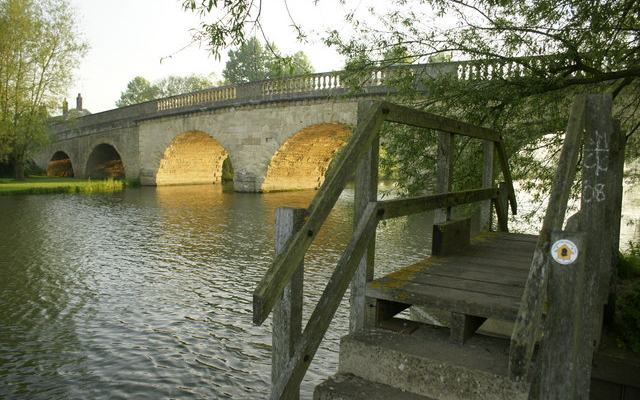
Swinford toll bridge near Eynsham is one of Oxfordshire's more memorable traffic bottlenecks. If you are one of the many people who regularly finds themselves stuck in a seemingly never-ending rush hour queue at the toll booth, you might find it a consolation to know that if you were travelling the same route a few hundred years previously, you would have had it a lot worse.
Although nowadays there are numerous other routes that travellers can take to reach Oxford, this was not always the case. Spots where the river Thames was crossable were few and far between, and anyone wishing to avoid Swinford could expect a sizable detour.
As a consequence, the route across the river at Swinford was one of the busiest in the county, with travellers from Cheltenham and even Wales passing through on their way to Oxford and then London.
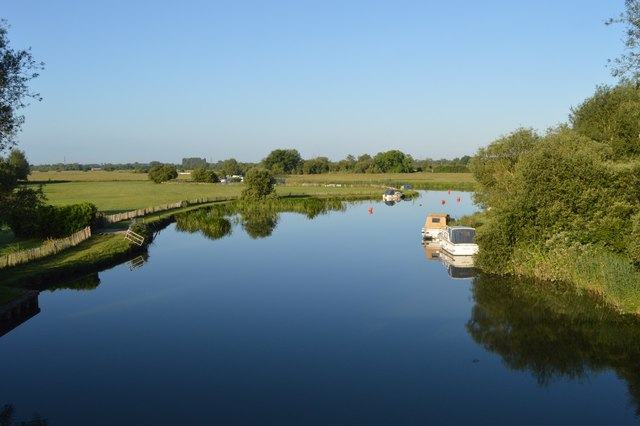
Photo: River Thames by N Chadwick, licenced CC BY-SA 2.0
What's in a name?
Swinford is a contraction of 'swine-ford', literally a place where the Thames was shallow enough for your herd of pigs to cross the river. This is in contrast to the less shallow crossing at 'ox-ford', where it was shallow enough for your oxen to cross, but your pigs would probably need a snorkel!
Hell and high water at Swinford Toll Bridge
Before the current bridge was built in 1769, crossing the river at Swinford could be a downright hazardous task. When the river was low in summer, the crossing would be little more than a refreshing paddle. However, in winter when the river was in flood it was an entirely different matter.
A ferryman was on hand who would, for a small fee, ferry you across the river in his flat-bottomed boat. But even so, disasters were common.
Welsh gold at the bottom of the river
In the winter of 1636, four sheriffs from Wales were tasked with transporting £800 in Royal gold eastwards from Wales to the Treasury in London. They made it as far as Swinford, but found the river flowing fast and high. Not wanting to delay their important journey with a long detour, the sheriffs decided to risk it and bribed the reluctant ferryman to take them across the churning waters.
They were halfway across when disaster struck. The ferry overturned, some say due to the weight of gold onboard. All four sheriffs were drowned and their cargo of gold was washed away down the river, never to be seen again.
John Wesley nearly drowns
The experience of the Welsh sherriffs was not at all unusual, the river has a history of similarly dicey crossings. Just a few years before the bridge was built, methodist preacher John Wesley came close to drowning when he attempted to cross the river here while it was in flood.
A poor quality ‘toll bridge’, little more than a wooden causeway, had been constructed nearby to facilitate crossing, but when Wesley arrived the water level was already higher than the causeway. Wesley’s horse stumbled on the causeway and came close to plunged into the deep water, taking its rider with it and the pair only managed to make it across with great difficultly and number of close shaves
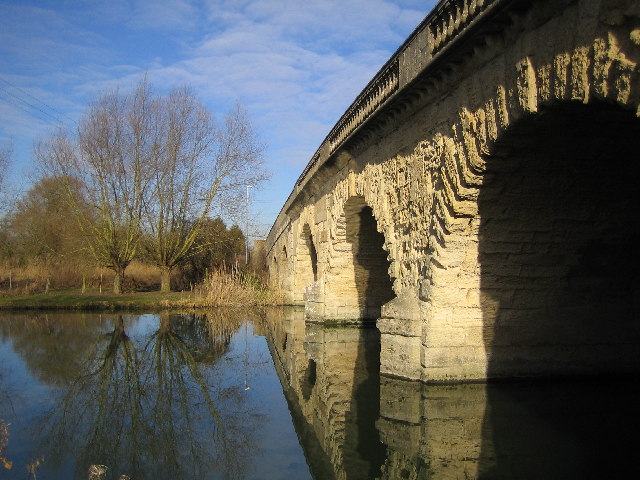
Photo: Photo: Nigel Cox, River Thames: Swinford Bridge, CC BY-SA 2.0
The bridge is finally built
King George II has a similar experience while crossing the flooded river a few years later in his royal coach. It is perhaps because of this incident that George decreed that whoever should build a bridge here should be permitted to collect tolls tax-free in perpetuity.
The person to take King George up on this offer was the 4th Earl of Abingdon, who paid for the construction of a bridge that opened in 1769. Made of stone and high enough for boats to pass underneath while heavy carriages passed above, the Earl of Abingdon’s bridge was a great improvement on the wooden bridge it replaced.
However, it didn’t prove the money-spinner the Earl had anticipated. Just five years after it was constructed, the bridge was badly damaged by flooding. The Earl’s attempts to raise money to repair the bridge by raising tolls failed, and the Earl was declared bankrupt soon after.
Why bother charging such a small fee?
To many encountering the bridge for the first time, the 5p fee for cars probably seems absurdly small. Surely the owners could raise the price substantially and people would still pay up? What prevents the owners from doing this is the fact that bridge was created by a 1767 act of parliament, the Swynford Bridge Act.
As such, it would take another act of parliament for the owners to be granted permission to raise the fee. In fact, an attempt in 1981 by the then-owners to raise the fee for cars form 2p to 10p was refused by a High Court writ. The fee was not raised to 5pm until 1994, when an inquiry agreed that the extra fee was needed to allow the owners to keep the bridge in a good state of repair.
Frankly, the legal proceedings that would be required by the owners to get the act of parliament altered again could cost them a huge amount legal fees, with no guarantee of success. As it stands, the current 5p fees still net the owners around £200k in tax-free income each year, so it’s easier for them to keep the fees as they are.
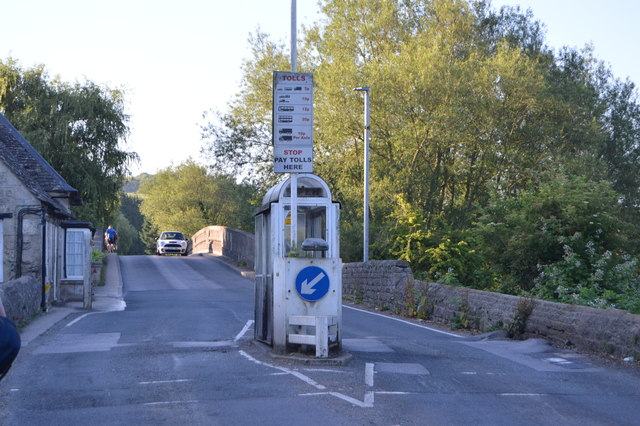
Photo: Swinford Toll Bridge by N Chadwick, CC BY-SA 2.0
Fun facts about the Swynford Bridge Act of 1767
The wording of the original 1767 act of parliament by which the bridge was founded has not much changed in the intervening 250-odd years, and as such contains a few anachronistic curios.
For example, if you're thinking of skipping paying the fee for crossing, watch out! The act states that owner of the bridge can ‘seize, take or distrain’ any ‘horse, cattle or other thing’ that a person may try to transport over the bridge without paying the correct toll.
Another part of the act states that owners of the bridge must provide a ferry service if the bridge is damaged or otherwise unusable. I'd be curious to see how this would be achieved, given the quantity and size of traffic that passes over the bridge each day!
Why is Swinford Toll Bridge still privately owned?
Many drivers who have found themselves stuck in the long queues that form around rush hour have probably wondered why the Oxfordshire Country Council doesn’t just buy the bridge from the owners. Surely it would be better to just purchase the bridge, abolish the fees and remove a notorious traffic bottleneck?
The answer again comes down to money. The bridge was last sold in 2009 for over £1 million, and so the council would probably need to pay considerably more than that to buy the bridge from the owners today. In fact, the Country Council turned down the opportunity to purchase it in 2009, saying at the time that they could not afford it.
The Council would then find themselves in possession of an expensive (if historic) bridge that would cost them a considerable amount to maintain, but which no longer generated any income to pay for said maintenance. It would just end up stretching the county’s already straining transport budget even further.
Toll collectors risk life and limb
Incredibly, the toll booth that stands in the middle of the road at the west end of the bridge was not constructed until the 1990s. Before this time, toll collectors went about their job with considerable risks from passing cars.
Perhaps unsurprisingly, before the construction of the booth a number of toll collectors had been struck by cars and injured!
Sources
- Swine-ford, ferry and bridge 1299-2008 (eynsham.org.uk)
- Swynford Bridge Act (legislation.gov.uk)
- Swinford Toll Bridge (wikipedia.org)
- Eynsham Heritage - Swinford Bridge (eynsham.org.uk)
- The 18th Century toll bridge people think is a 'joke' (bbc.co.uk)
- The Swinford Toll Bridge (Auto Shenanigans - Youtube)