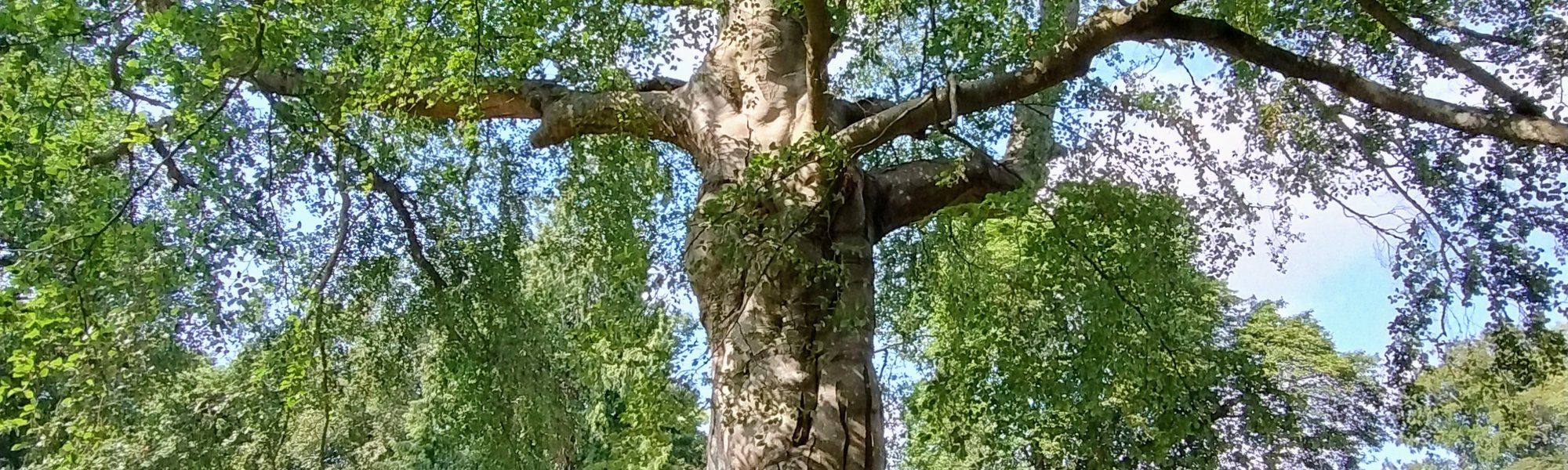
Witney's Wishing Tree
19 July 2026
The Wishing Tree in Tower Hill Cemetery holds a special place in Witney folklore. In the past, it was traditional for those who found themselves in desperate need to embrace this huge old beech tree and make a wish. It is said that the wish would come true.
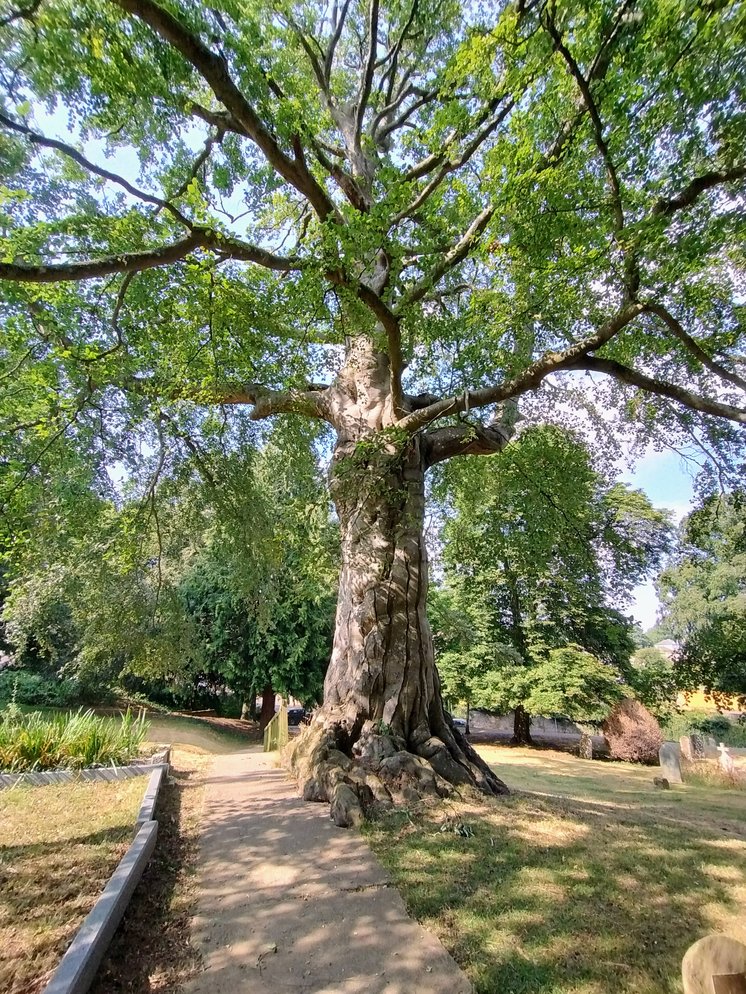
The Wishing Tree at Tower Hill Cemetery, Witney. Credit: Photo: William Ross, license CC BY-SA
When I visited the Wishing Tree on a hot July day, the dappled shade from the tree's branches provided welcome respite from the sun. I had heard that the tree was recently under threat due to its age and the fungus growing near the base of the tree, which suggested that it might be dying. But when I visited it seemed full of life, not least the squirrels running up and down its trunk!
I've not been able to discover exactly how old the Wishing Tree is. It's possible that it was amongst those planted when the cemetery was first opened in 1857. I can certainly believe that, given the size and considerable girth of the tree!
Cemetery champions
Tree-lovers should also keep an eye out for the immense Golden Chinese Juniper, which can be found close to the chapel on the Curbridge Road side of the cemetery. This tree is recorded in the UK Tree Register as the largest of its kind in Britain, earning it the title of 'Champion Tree'.
Wishing Trees and Coin Trees
Folklore around 'wish trees' in the UK is intertwined with that of the 'coin tree', a tree or stump into which people have hammered coins to represent the wishes they have made. This (thankfully) doesn't seem to be the case with the Witney Wishing Tree, though regarding the strangely twisted and pitted trunk of the tree, I did wonder if this practice may have been carried out in the past.
The nearest 'coin tree' that I'm aware of can be found in Sturt Wood in East End and is still in use, with new coins appearing in the cracks of this fallen tree trunk regularly.
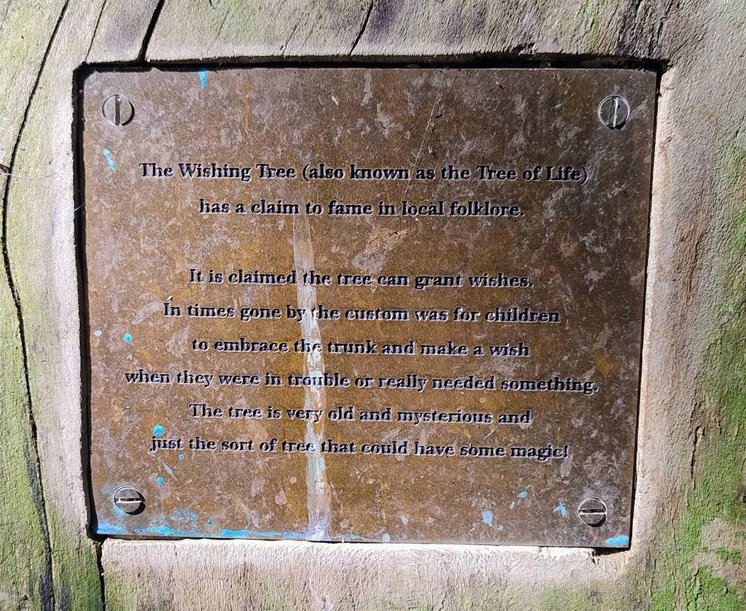
Photo: Photo: William Ross, license CC BY-SA
'... very old and mysterious ...'
The Wishing Tree is recognised by a small plaque nearby which notes 'The tree is very old and mysterious and just the sort of tree that could have some magic!'
The tree can be found close to the Tower Hill entrance on the north side of the cemetery. This PDF map from Witney Town Council can help you find it.
Other cemetery treasures
After visiting the Wishing Tree, it's definitely worth having a stroll around the oldest part of the cemetery, which can be found at the bottom of the hill and where many unusual grave stones and other Victorian memorials can be found.
Look out for the memorial to the Roberts family of Caswell Farm, Curbridge. This chest tomb has been given a tower at one end, giving it the appearance of a tiny church. The tomb has sunk slightly on one side, adding a somewhat topsy-turvy element to its already-unusual appearance!
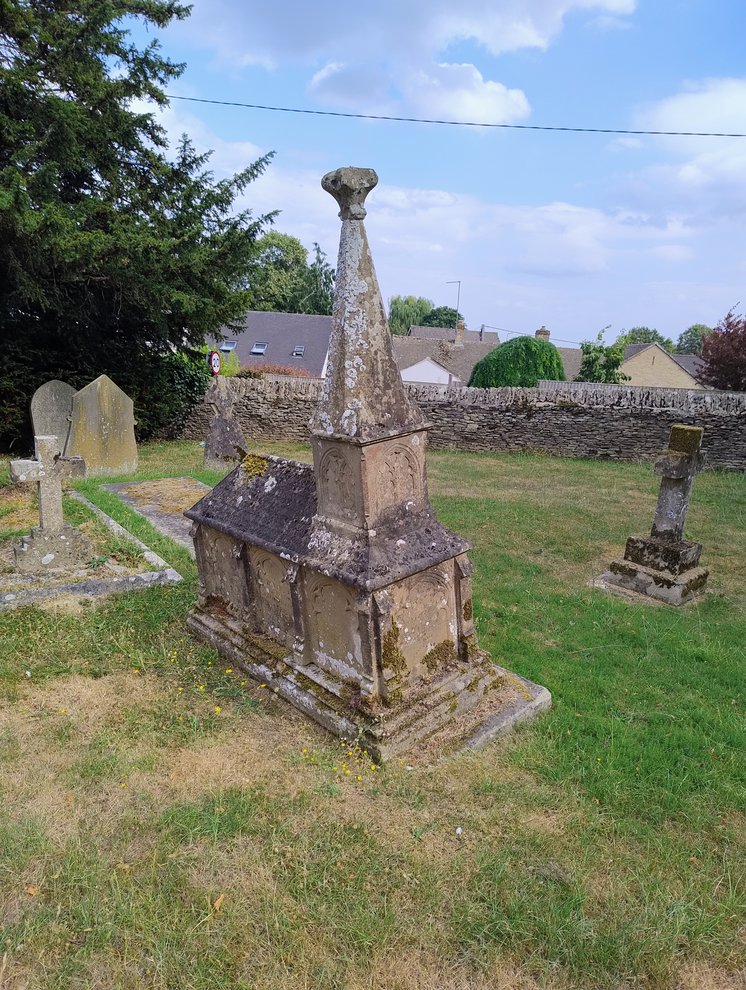
The Roberts family chest tomb at Tower Hill Cemetery. Credit: Photo: William Ross, license CC BY-SA
The cemetery contains not one but two chapels. The first, on the south side of the cemetery, was designed by prolific local architect William Wilkinson. Wilkinson is most famous for designing the Randolph Hotel in Oxford, but was also responsible for a number of local churches, vicarages and schools. He also seems to have had a sideline in designing police stations, including those at Witney, Woodstock, Burford and Chipping Norton.
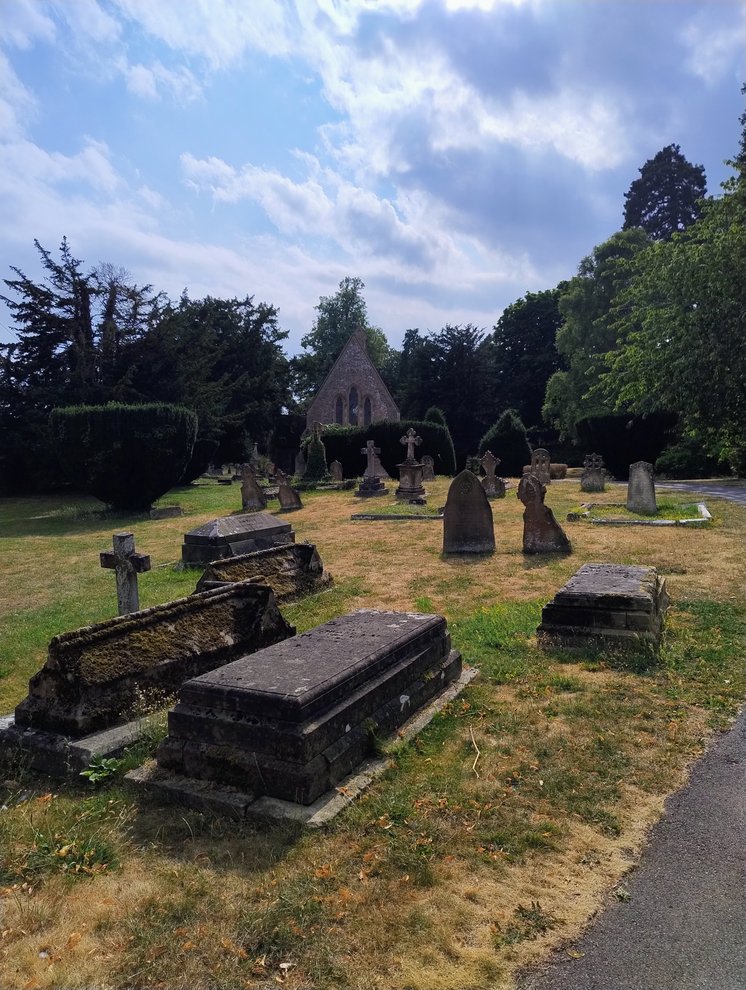
Tower Hill Cemetery, looking towards the consecrated chapel. Credit: Photo: William Ross, license CC BY-SA
The second chapel on the north side of the cemetery is referred to rather ominously as the 'un-consecrated chapel'. This simply means that it was for the use of Witney's considerable non-Church of England population, which at the time the chapel was constructed included Quakers, Baptists, Methodists, Catholics and more.


